Industries · Technology and security
Lead capture for technology and security sales teams
Technology and security systems are sold in client meetings, on site surveys and at a handful of large shows each year. SEL XP keeps one record of every conversation, whoever in your team had it and wherever it happened, and puts it in your CRM within a minute.
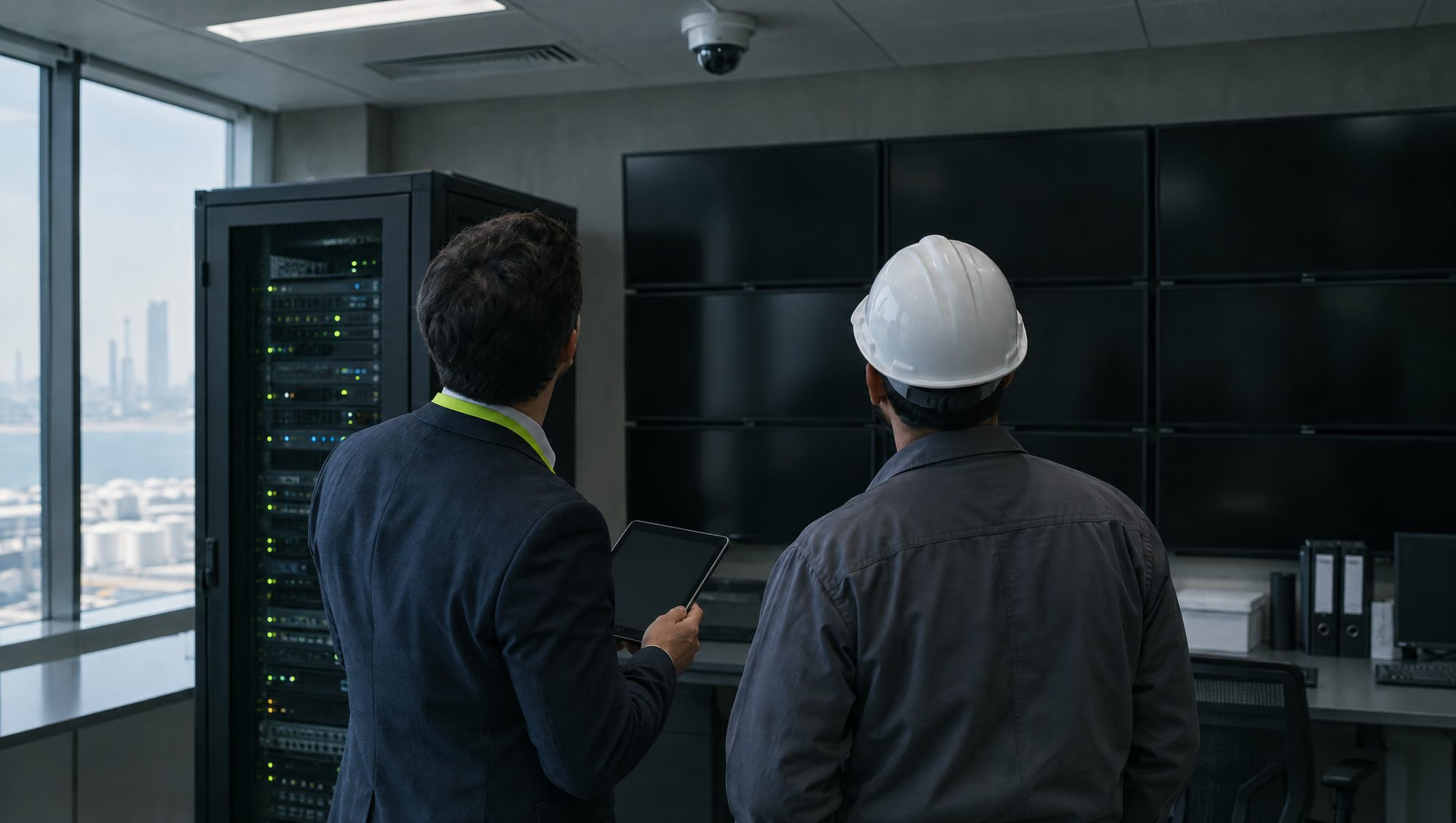
On customer sites
- Who your team visits
- IT and security managers, facility managers, consultants, and the partners and installers who resell.
- What a visit is for
- A site survey, a proof of concept or a demonstration, a design and a quotation, and compliance documents.
- How the week runs
- Client meetings and site surveys, with several people from the customer in each.
At exhibitions
- Who comes to the stand
- Government and enterprise IT leaders, chief information and security officers and their teams, system integrators and resellers, startups and investors. At security shows, consultants and installers.
- What they ask for
- A demonstration, a proof of concept or pilot, pricing and licensing, local partner terms, answers on data residency and compliance, regional references.
- How long a deal takes
- 3 to 12 months, longer for government tenders and usually through a local partner. Channel and hardware deals can close in 1 to 3 months.
The problem
What goes wrong between the meeting and the sale
- 01
The organiser's scanner gives you a list, later
A badge scan records that someone stopped. It does not record what they asked, and the file arrives after the show.
- 02
The site survey nobody wrote up
The survey decides the design and the price. What was seen on site stays in one engineer's head until the quotation is due.
- 03
Partner or customer?
A reseller and a government buyer need different teams. On the stand they are both a name on a badge.
- 04
The pilot that was promised
A proof of concept was agreed in a ten-minute conversation. A month later nobody is sure who was to start it.
How SEL XP fits
Built for the way technology teams sell
Your own capture, at every show
Business cards, QR codes and LinkedIn codes, with what was asked recorded at the time. It works at any show and on customer visits in between.
Qualified, not just counted
Role, interest, timeline and next action take a few taps. The score separates the buyer with a project from a visitor passing by.
Channel team or enterprise team
Hand partner leads to one team and end-customer leads to another, with their tasks, and undo within two minutes if you were wrong.
One show against another
Every event has the same numbers: leads against target, qualified, hot, pipeline and time to first follow-up.
The pilot has an owner
A demonstration or proof of concept is a task with a date. A hot lead with no contact after two days is sent to the manager.
Answers for your security team
Each customer's data is separated in the database itself, sign-in is by emailed code, and admin changes are audited.
The same numbers for every team
Leads, qualified and hot leads, pipeline and time to first follow-up, measured the same way whichever branch or team you narrow to, with leads by how they were met.
See the whole productAt an exhibition, start to finish
What your team does, and when
- Before
Add each show of the season with its targets. Load one catalogue per product. Decide which team takes partners and which takes end customers.
- On the stand
Scan the card or the QR, tap role and interest, book the demonstration as a task, send the follow-up.
- Each evening
Route partner and customer leads to their teams. Compare the day with the same day at the last show.
- The week after
Demonstrations and pilots run against tasks. The export feeds the marketing review.
Case studies
Technology and security: two teams, worked through
One team that sells on customer sites and one on an exhibition stand.
ScenarioIn the field
A security integrator's engineers on site surveys
Every job starts with a survey of the building. Many clients' cards are printed only in Arabic, plant rooms have no signal, and survey notes reached the office days later.
- Team
- 7 sales engineers in two branches, 2 branch managers
- Field
- Site surveys of offices, warehouses and hospitals, one or two a day
- CRM
- Odoo
ScenarioAt an exhibition
A cybersecurity vendor exhibiting at three shows in one season
Three shows, three organiser apps, three spreadsheets in three formats. Marketing could not say which show had been worth the stand.
- Team
- 10 on each stand: sales, pre-sales and channel
- Show
- Three technology and security shows in Dubai and Riyadh
- CRM
- Salesforce (leads exported until that connector is ready)
The calendar
Upcoming technology exhibitions in the Gulf
Dates checked against the organiser's or the venue's own site. Open a show for its venue, organiser and official link.
Questions
Technology and security: what teams ask
If an organiser encrypts its badges, only its own app can decode them: SEL XP keeps the code with the lead and you add the name. CRM connectors for Salesforce, HubSpot and Dynamics 365 are planned; until then those teams use the spreadsheet export.
Can sales engineers record site surveys?
Yes. An engineer starts a visit from the lead, records who attended and what was asked, and dictates a voice note afterwards, which is transcribed. The next step is a task with a date. With the Field Presence add-on the survey is on the lead with its time on site.
Is this a replacement for the organiser's lead retrieval app at shows like GITEX?
For most of what a sales team needs, yes. SEL XP captures cards and open QR codes, records what was asked, follows up at once and works at every show you attend. If an organiser encrypts its badges, only its own app can read them, so some teams use both at that show.
Can we compare results across several exhibitions?
Yes. Every event is measured the same way: leads against target, qualified and hot leads, pipeline by currency and time to first follow-up. The Overview can be narrowed to one event, company, team or period.
Where is the data hosted, and who can see it?
SEL XP's database and files are in Mumbai, India. Each customer has a separate workspace enforced by row-level security in the database, and inside a company people see their own leads and those of the people below them. A self-hosted deployment is the option for a company that must keep data in its own country.
See it with your team
Leave every meeting with a next step.
Tell us how your team sells: on customer sites, on the road or at exhibitions. We will show you the app with your products, your team structure and your CRM in mind.
- What happens next
- Day 0You send the form. We reply within one working day.
- 30 minA call on your screen: capture, follow-up, CRM and what your managers see.
- Set-upWe build your workspace with you: companies, teams, products, wording.